📢 Important Update: Consultation fee will be revised to ₹600 effective from 1st July 2026.

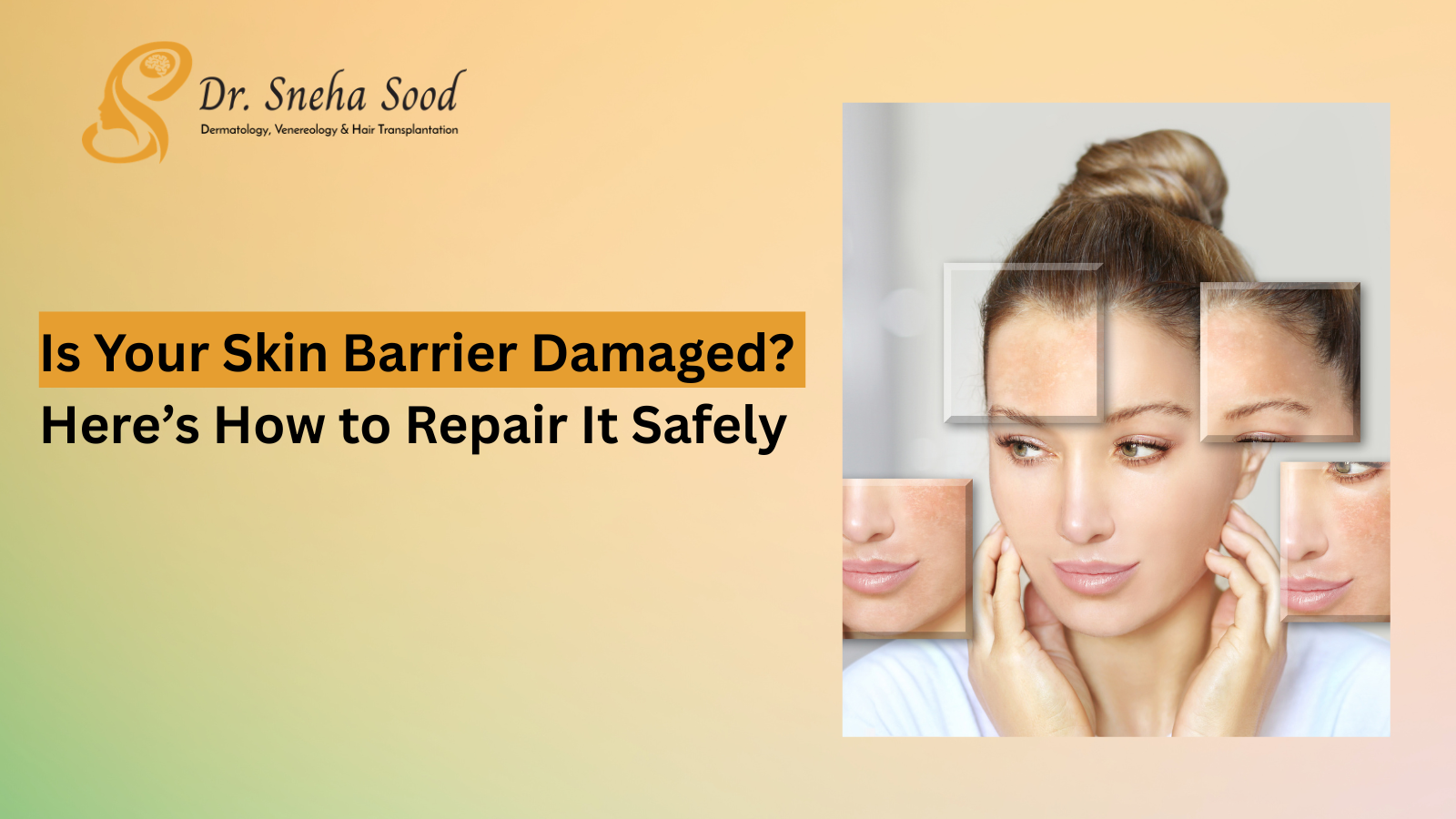



If your skincare products suddenly sting, your skin feels irritated all the time, or breakouts appear despite following a routine, the issue is often not the product itself. In many cases, it is a damaged skin barrier.
Today, skin barrier damage has become extremely common. Overuse of actives, frequent product switching, influencer-driven routines, and environmental stress have made skin more reactive than ever. Most people do not damage their skin through neglect. It usually happens while trying to improve texture, glow, or pigmentation.
When the skin barrier is compromised, even the best serums and treatments stop working. Understanding why this happens and how to repair the barrier safely is essential for long-term skin health.
The skin barrier is the outermost protective layer of your skin. Its primary role is to retain moisture within the skin while blocking harmful external factors, such as pollution, bacteria, and irritants.
This barrier is made up of skin cells held together by natural lipids like ceramides, cholesterol, and fatty acids. When these components are balanced, the skin feels comfortable, hydrated, and resilient.
When the barrier is damaged, the skin loses water easily and becomes vulnerable. Sensitivity increases, inflammation sets in, and the skin reacts unpredictably. This is why healthy-looking skin always starts with a strong skin barrier, not with active ingredients.
Skin barrier damage often develops slowly through daily habits that seem harmless.
Common contributors include:
Individually, these habits may not cause visible damage. Over time, however, they weaken the barrier and make the skin increasingly sensitive and reactive.
Barrier damage does not always look dramatic, which is why it is often ignored in the early stages.
Common signs include:
These symptoms are frequently mistaken for acne, allergy or product failure, leading people to add more treatments instead of addressing the underlying barrier damage.
Layering multiple products incorrectly is one of the fastest ways to worsen barrier damage. Combining acids, retinoids, and exfoliants without understanding skin tolerance overwhelms already stressed skin.
When the barrier is weak, active ingredients penetrate unpredictably. Instead of improving results, this leads to irritation, breakout,s and worsening pigmentation. This is why people often feel their serums have “stopped working” when, in reality, the skin is no longer able to tolerate them.
More products do not mean better skin. In many cases, simplicity is what allows the barrier to recover.
Environmental factors significantly influence skin barrier health. Pollution increases oxidative stress, which damages skin cells and disrupts the barrier. Hard water interferes with natural lipids, making the skin drier and more sensitive over time.
Air-conditioned environments increase water loss from the skin, while seasonal changes worsen dryness and irritation. Lifestyle stress, poor sleep, and dehydration further reduce the skin’s ability to repair itself.
Together, these factors make modern urban skin more vulnerable, even in people who never had sensitive skin before.
How to Repair a Damaged Skin Barrier Safely?
Repairing the skin barrier requires restraint rather than aggressive correction. The first step is simplifying the routine to reduce ongoing irritation.
Key principles of safe barrier repair include:
Barrier repair is gradual. Most people notice improvement over a few weeks, but rushing the process often leads to repeated damage.
Certain actions prevent the barrier from healing properly:
Healing requires giving the skin time to rebuild its natural defence mechanisms.
If sensitivity, irritation, or breakouts persist beyond two to three weeks despite simplifying your routine, professional guidance becomes important. Recurrent pigmentation, worsening acne, or skin reacting to nearly everything suggests deeper inflammation or barrier dysfunction. Early dermatological evaluation helps correct routines, identify trigger,s and prevent long-term damage.
Modern skincare often focuses on correction rather than protection. However, strong treatments only work when the skin barrier is healthy. Protecting and repairing the skin barrier restores balance, improves treatment response, and prevents recurring problems. Healthy skin is achieved by doing less, but doing it correctly.
If your skin feels sensitive, unpredictable, or constantly irritated despite using good skincare products, it may be a sign of ongoing skin barrier damage. A dermatology consultation helps identify what is weakening your skin barrier and how to restore it safely, without unnecessary treatments or product overload.
Under the care of Dr Sneha Sood, skincare guidance is tailored to your skin’s condition, tolerance, and lifestyle, ensuring barrier repair that supports long-term skin health rather than short-term fixes.