📢 Important Update: Consultation fee will be revised to ₹600 effective from 1st July 2026.

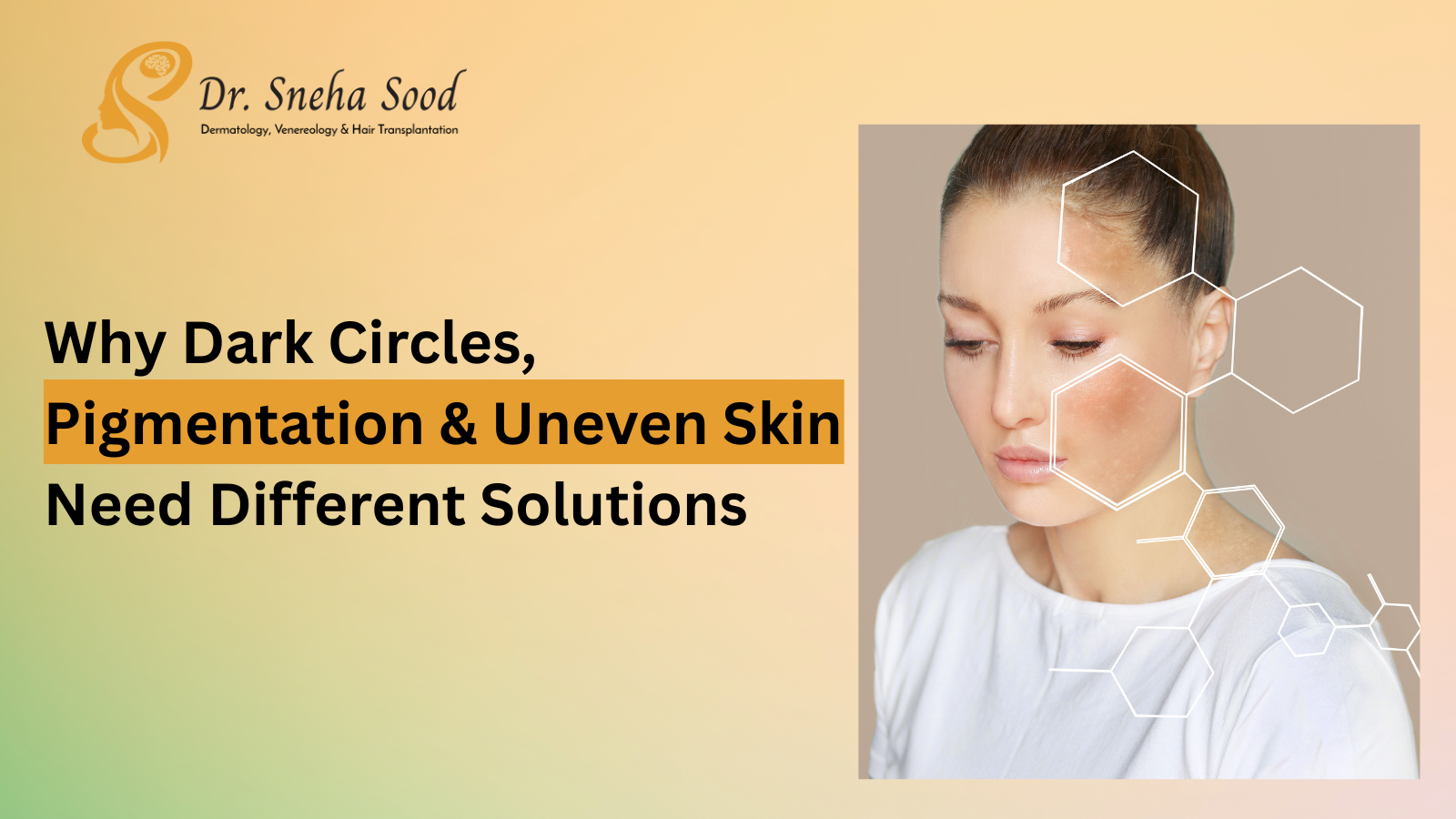



Dark circles, pigmentation and uneven skin tone are some of the most common concerns seen in dermatology clinics. Yet they are also among the most misunderstood. Many people try multiple creams, peels or home remedies, only to feel frustrated when results are minimal or temporary. One reason for this confusion is how pigmentation is often oversimplified online. Social media tends to promote single solutions for complex skin issues, making it seem like one treatment should work for everyone. In reality, pigmentation is not one problem, and there is no universal fix.
Understanding what causes your pigmentation is far more important than choosing a treatment. Without proper diagnosis, even advanced procedures may fail or worsen the condition.
Dark circles can appear similar on the surface but have very different underlying causes. Pigmented dark circles are brown or dark in colour and are caused by excess melanin. These are more common in people with medium to deeper skin tones. Vascular dark circles appear bluish or purplish due to visible blood vessels under thin skin. They often worsen with fatigue or dehydration.
Hollow or shadow-based dark circles are caused by volume loss under the eyes. Light creates shadows, making the area appear darker even without pigmentation. Many people have mixed dark circles, where pigmentation, vascular changes and hollowness coexist. Treating all dark circles with the same cream or procedure rarely works because the cause has not been identified.
Sun exposure and sleep deprivation are only part of the picture. Pigmentation can also be influenced by hormones, especially in conditions like melasma. Post-inflammatory pigmentation occurs after acne, rashes or cosmetic procedures and can linger for months if not managed correctly. Genetics play a major role in how easily skin produces pigment and how long it takes to fade.
Lifestyle factors such as friction from rubbing, incorrect makeup removal and use of harsh products can darken skin over time. Lip pigmentation is often worsened by smoking, frequent lip licking, irritation and unsuitable cosmetic products. Understanding these varied causes is essential before choosing a treatment plan.
Home remedies and viral skincare hacks often promise quick results but rarely address the underlying cause of pigmentation. Ingredients like lemon, baking soda or aggressive scrubs irritate the skin, triggering inflammation and worsening pigmentation. Overuse of brightening products without supervision can compromise the skin barrier and slow healing.
Temporary lightening may occur initially, giving false hope, but pigmentation often returns darker and more stubborn. Delaying professional care allows pigmentation to become deeper and harder to treat.
Treatments chosen without proper evaluation can cause more harm than benefit. Chemical peels done on inflamed or sensitive skin can increase pigmentation instead of reducing it. Using strong actives when the skin barrier is compromised leads to irritation and rebound darkening.
Under-eye hollowness is often mistaken for pigmentation, leading to repeated topical treatments that show no improvement. Lip pigmentation can worsen when irritating products are applied repeatedly. This is why chemical peels and other procedures should never be approached as a one-size-fits-all solution.
Different pigmentation concerns require different approaches. Chemical peels are useful for superficial pigmentation and uneven tone when chosen correctly. They do not work for vascular dark circles or volume-related shadows. Lasers can help with certain pigment patterns and vascular components, but must be selected carefully based on skin type.
Injectables may be required for hollowness rather than colour correction. Topical products support treatment and maintenance but rarely work as standalone solutions. Correct treatment selection depends entirely on accurate diagnosis.
The success of pigmentation treatment depends less on the procedure and more on understanding the skin. Skin type, depth of pigmentation, triggers and lifestyle factors all influence outcomes. The same treatment may work beautifully for one person and fail for another. A diagnosis-first approach ensures that treatments are tailored, safe and effective. This reduces unnecessary procedures and prevents long-term skin damage.
Pigmentation correction is gradual. Most treatments require time, multiple sessions and maintenance. Combination approaches are often needed rather than a single procedure. Some pigmentation can be improved significantly, but not erased completely.
Honest expectations protect patients from disappointment and build long-term skin confidence. Ethical dermatology prioritises realistic outcomes over exaggerated promises.
If pigmentation is long-standing, worsening or affecting confidence, professional evaluation is advisable. Lip pigmentation that does not respond to basic care, pigmentation following cosmetic procedures or dark circles that persist despite adequate sleep all require assessment. Early consultation prevents incorrect treatments and ensures safer, more effective care.
Dark circles and pigmentation are not cosmetic flaws with simple fixes. They are complex conditions influenced by biology, environment and lifestyle. One-size-fits-all treatments rarely succeed. Correct diagnosis, personalised planning and professional guidance lead to safer and more meaningful improvement. Skin clarity is not achieved through shortcuts but through understanding.
If you are confused about which treatment is right for your dark circles or pigmentation, a dermatologist-led evaluation can provide clarity. Instead of trial and error, personalised assessment helps identify the real cause and the most suitable approach.
With Dr Sneha Sood, renowned dermatologist in Bangalore at Sood Aesthetics, every concern is evaluated before treatment is recommended, ensuring ethical, customised and results-driven care. Book your consultation now!