📢 Important Update: Consultation fee will be revised to ₹600 effective from 1st July 2026.
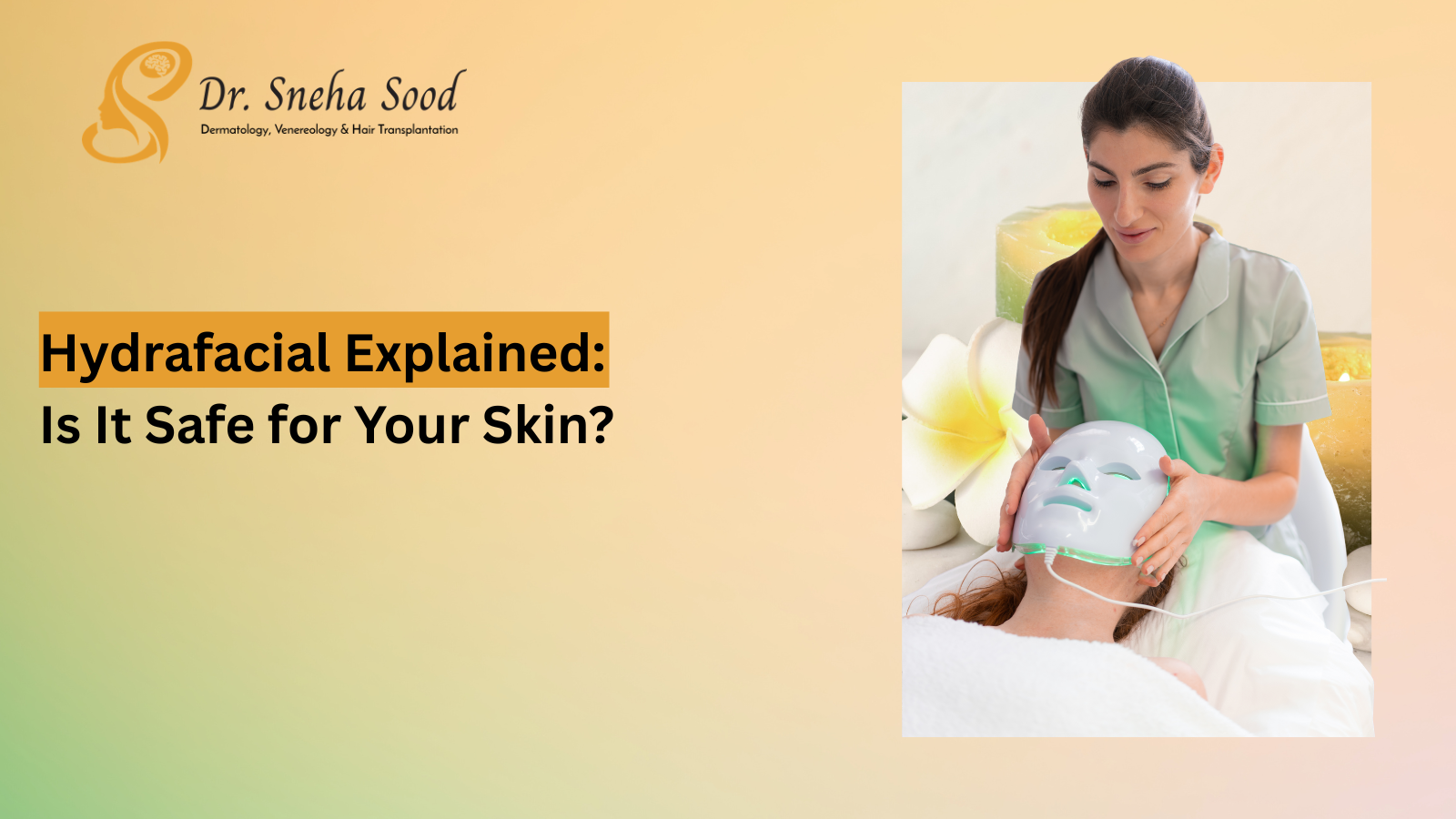



Hydrafacial has quickly become a favourite in modern skincare, appearing everywhere from dermatology clinics to social media feeds. The treatment is known for delivering deep cleansing, smoother skin, and noticeable hydration in a single session.
Unlike traditional facials, it uses specialised technology to exfoliate, extract impurities, and infuse nourishing serums.
Still, before scheduling an appointment, many people wonder: is Hydrafacial actually safe for the skin?
Before you book your first appointment, here’s what dermatologists want you to know about Hydrafacial safety and suitability.
To understand its safety, it helps to look briefly at how Hydrafacial works.
Hydrafacial is a multi-step skin resurfacing treatment that cleanses, exfoliates, and hydrates the skin using a specialised device.
The technology works by:
These steps work together to improve skin clarity, hydration, and overall texture.
Because the treatment is designed to be controlled and non-aggressive, it is often considered milder than procedures such as deep chemical peels or intensive resurfacing treatments.
In most cases, Hydrafacial is safe for many skin types, particularly when the treatment is customised for individual skin concerns.
Dermatologists often recommend it for people dealing with:
One reason the treatment is widely used is that it can be adjusted according to skin sensitivity. Practitioners can modify the suction strength, exfoliation level, and serums used during the procedure.
This level of customisation helps minimise irritation while still delivering visible results.
When performed correctly, the treatment is unlikely to cause harm. Hydrafacial is designed to be gentle and controlled, which makes it safer than many aggressive exfoliation techniques.
That said, minor reactions can occasionally occur, including:
These effects are usually short-lived and resolve within a day.
Problems are more likely if the procedure is performed improperly or if underlying skin conditions are not assessed beforehand. For this reason, dermatologist guidance and trained practitioners are essential.
People with reactive skin often hesitate before trying new cosmetic treatments. Fortunately, Hydrafacial for sensitive skin may still be suitable when carefully customised.
Dermatologists typically adjust the treatment by:
These adjustments help reduce the likelihood of irritation while still allowing the skin to benefit from hydration and cleansing.
Even so, individuals with highly sensitive or reactive skin should consider consulting a professional before treatment.
Although Hydrafacial is generally safe, certain skin conditions may require postponing the procedure.
You may need to delay treatment if you have:
Performing a cosmetic procedure under these conditions could worsen inflammation or slow down healing.
A professional skin evaluation ensures that the treatment is appropriate for your current skin condition.
Proper Hydrafacial aftercare helps maintain results and protect your skin after treatment.
Dermatologists usually recommend:
Following these steps allows the skin to recover smoothly while preserving the refreshed, hydrated look achieved during the treatment.
While Hydrafacial can improve the appearance of your skin, it does not replace professional medical care.
A dermatologist consultation may be more appropriate if you have:
In such cases, professional evaluation can help identify the root cause and guide the most suitable treatment plan.
Hydrafacial stands out as a modern treatment designed to cleanse, hydrate, and revitalise the skin with minimal disruption to your routine. Its growing popularity reflects how effective gentle, technology-driven skincare can be. With the right professional guidance and personalised approach, it can be a reliable option for achieving healthier, more radiant skin.
A professional consultation helps determine whether a Hydrafacial is the right choice for your skin. Since every skin type responds differently to cosmetic treatments, personalised guidance ensures the procedure supports skin health without causing unnecessary irritation.
Under the care of Dr Sneha Sood, treatment plans are tailored to your skin’s condition and long-term skincare goals, helping you achieve safe, balanced, and naturally healthy-looking results.