📢 Important Update: Consultation fee will be revised to ₹600 effective from 1st July 2026.
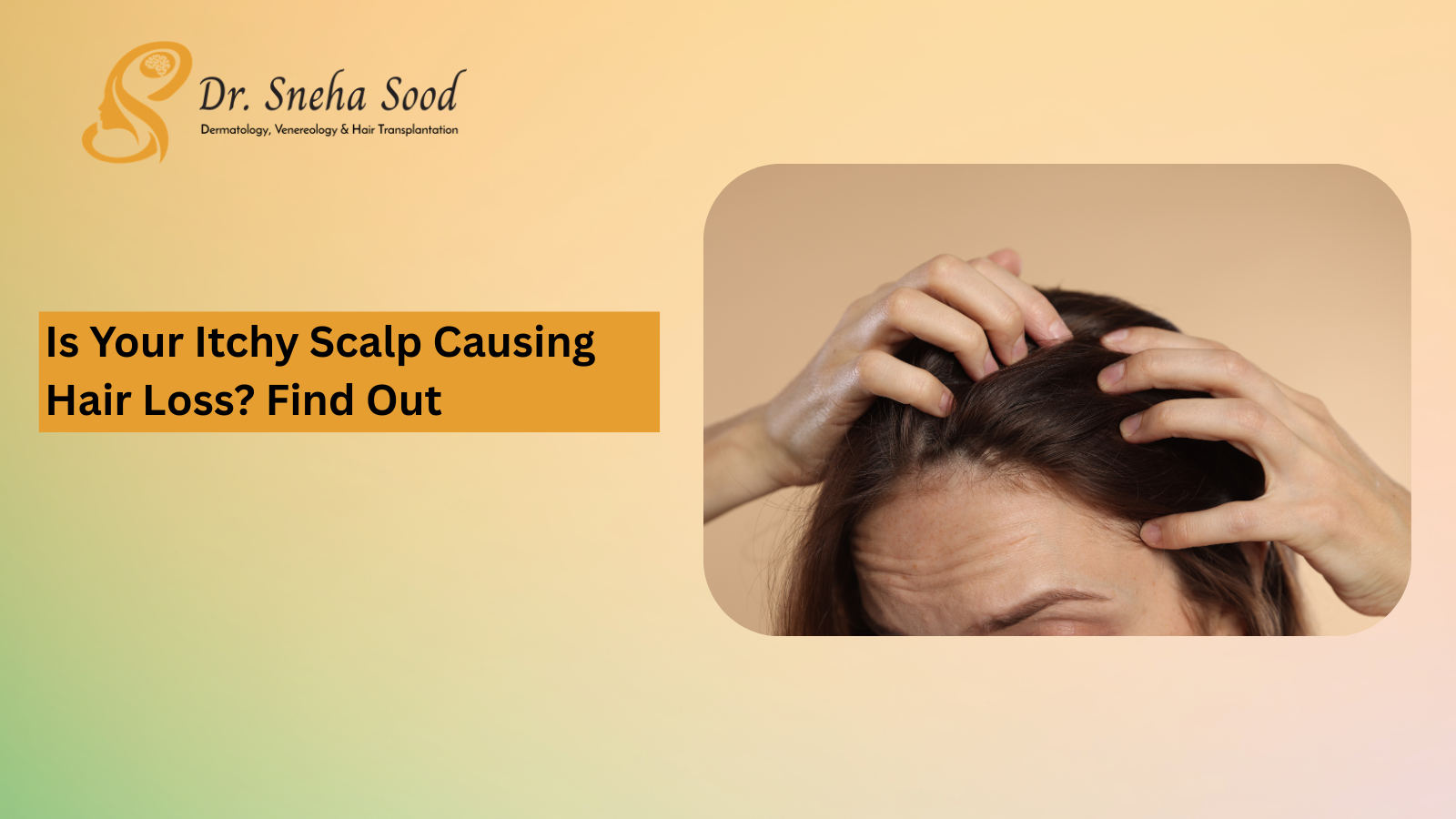



Many patients who come to Sood Aesthetics in Bangalore present with two complaints they think are separate: "I have a really itchy scalp" and "I'm losing a lot of hair." They're often surprised to learn these are frequently the same problem — or at the very least, closely related.
Scalp health is foundational to hair health. A chronically inflamed, itchy scalp doesn't just feel unpleasant — it creates an environment in which hair follicles can weaken, miniaturise, and shed prematurely. Understanding why your scalp itches is the first step toward addressing the hair loss that often accompanies it.
Seborrhoeic dermatitis: One of the most common scalp conditions in Bangalore. Characterised by greasy, yellowish flakes on an oily scalp with accompanying itch. Caused by an overgrowth of the Malassezia yeast that naturally lives on the scalp. The resulting inflammation disrupts the hair follicle environment and accelerates telogen shedding (early entry into the hair loss phase).
Dandruff (pityriasis capitis): A milder form of seborrhoeic dermatitis. White or grey dry flakes with scalp itching. While dandruff itself rarely causes significant hair loss, chronic scratching and the associated low-grade inflammation over months can contribute to shedding in susceptible individuals.
Scalp psoriasis: Thick, silvery-white plaques on the scalp, often extending to the hairline, ears, and back of the neck. The plaques and associated inflammation can disrupt follicle cycling. Aggressive scratching at scale causes mechanical hair breakage.
Tinea capitis (scalp ringworm): A fungal infection of the scalp — much more common in children but can occur in adults. Creates scaly, itchy patches with broken hair or bald patches within them. Requires antifungal treatment (oral, not just topical) for resolution.
Folliculitis: Bacterial or fungal infection of the hair follicles themselves. Creates tender, itchy pus-filled bumps on the scalp. If recurrent or untreated, can cause scarring and permanent follicle damage in that area.
Lichen planopilaris: A scarring form of alopecia driven by inflammation targeting the hair follicle. Creates itching, burning, and redness around follicles — followed by permanent hair loss in affected patches if untreated. Requires prompt dermatological intervention.
Bangalore's hard water is a genuine aggravating factor. The calcium and magnesium deposits from hard water disrupt the scalp's pH, alter the scalp microbiome, and increase Malassezia proliferation. The city's pollution coats the scalp with particulate matter that clogs follicles and triggers inflammation. Add to this the stress of Bangalore's work culture — and cortisol's well-documented effect of worsening both seborrhoeic dermatitis and hair shedding — and you have a perfect environment for chronic scalp problems.
If scalp itching has persisted for more than 4 weeks, if you're seeing bald patches, if OTC shampoos have provided no relief, or if you're losing more hair than usual alongside the itch — book a trichology consultation. Early treatment of scalp conditions prevents the progressive follicle damage that makes hair loss harder to reverse.
An itchy scalp and hair loss are often two presentations of the same underlying problem. Treating the scalp condition correctly — with the right diagnosis and appropriate treatment — addresses both simultaneously. Don't accept a chronically itchy, flaking scalp as normal. It is treatable, and addressing it protects your hair long-term.
Mild dandruff rarely causes permanent loss. However, severe, chronic seborrhoeic dermatitis with significant inflammation can accelerate shedding. Treating the underlying condition usually restores normal hair cycling.
If OTC anti-dandruff shampoos haven't improved your symptoms in 4 weeks, if you have thick plaques, painful follicles, spreading bald patches, or hair loss alongside itching — prescription treatment is warranted.
Hard water can aggravate existing scalp conditions and worsen the scalp microbiome. A chelating shampoo and, where possible, a water filter attachment can help reduce this exposure.
Gentle scalp massage improves circulation and may support hair growth. However, aggressive massage on an inflamed scalp worsens irritation. Avoid massage during active flares.
Hair shed due to scalp inflammation typically begins to regrow 3–4 months after the underlying condition is controlled. Full regrowth may take 6–12 months.