📢 Important Update: Consultation fee will be revised to ₹600 effective from 1st July 2026.

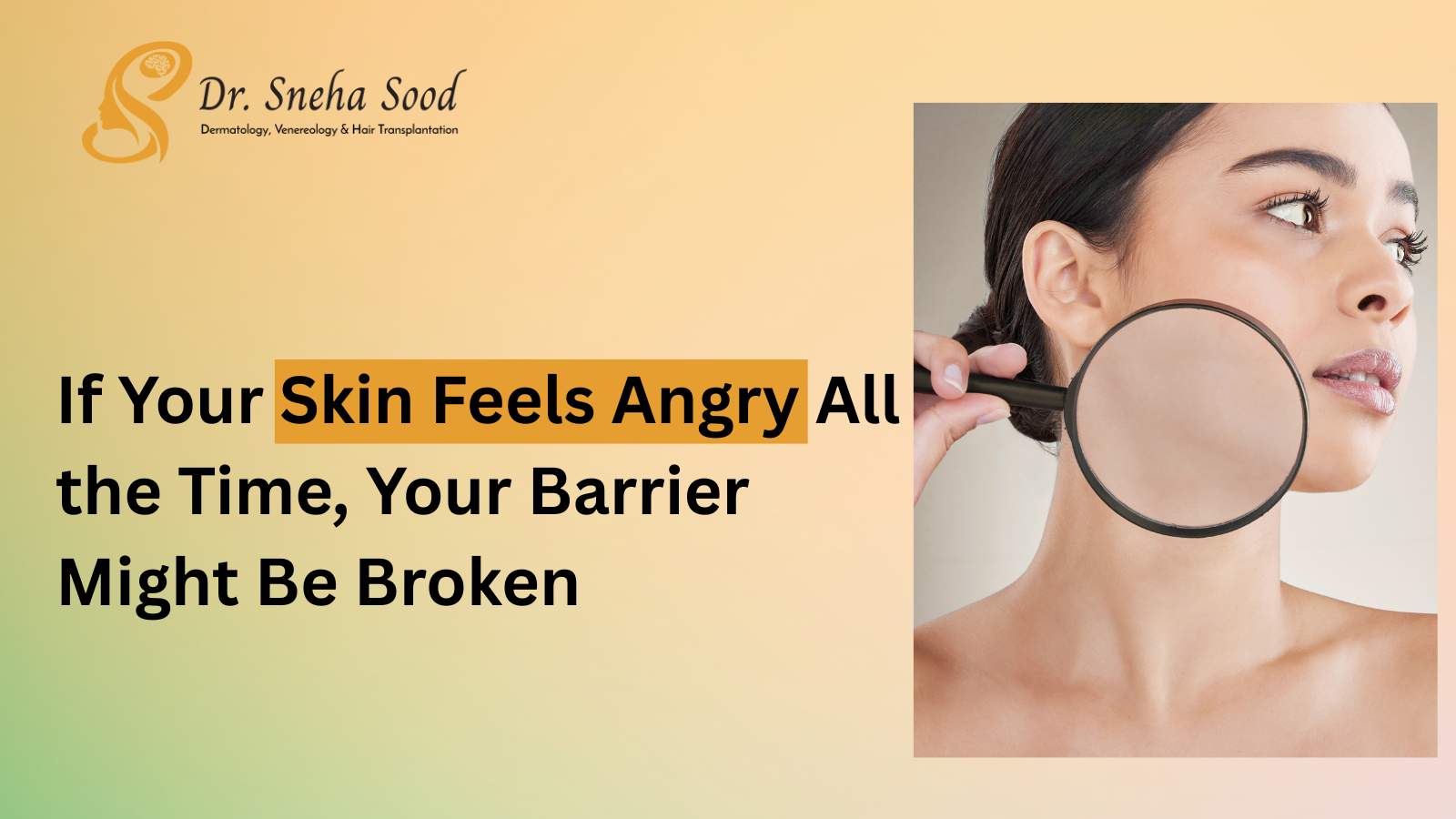



If your skin feels irritated, unusually dry, suddenly acne-prone or reactive to products that once worked well, the problem may not be your skincare products at all. In many cases, it is the skin barrier that has been quietly damaged over time. With winter weather, frequent product switching, heavy actives and social media-driven routines, skin barrier damage has become increasingly common. Most people do not damage their skin out of neglect.
It usually happens unintentionally, while trying to improve texture, glow or pigmentation. Understanding what the skin barrier is and how to protect it is essential. Without a healthy barrier, even the best serums and treatments fail to deliver results.
The skin barrier is the outermost protective layer of your skin. Think of it as a shield that keeps moisture in and harmful elements out. It is made up of skin cells held together by natural lipids like ceramides, cholesterol and fatty acids. When this barrier is healthy, your skin stays hydrated, calm and resilient. It protects against pollution, bacteria, allergens and excessive water loss.
When it is damaged, the skin loses moisture easily and becomes vulnerable to irritation, infections and inflammation. Healthy-looking skin always begins with a strong skin barrier. No active ingredient can compensate for a compromised one.
Many common habits slowly weaken the skin barrier without obvious warning signs at first. Over-cleansing is one of the biggest culprits. Washing the face too often or using harsh cleansers strips away natural oils essential for barrier function. Daily use of strong actives like acids or retinoids without rest days overwhelms the skin. While these ingredients are effective, overuse leads to inflammation and barrier breakdown.
Frequently switching products does not allow the skin to adapt or heal. Each new formula introduces different preservatives, fragrances or actives that may irritate compromised skin. Hot showers and frequent face steaming increase water loss from the skin, making dryness and sensitivity worse. Skipping moisturiser because your skin feels oily or acne-prone also weakens the barrier. Oily skin still needs hydration and barrier support.
A damaged skin barrier often shows subtle but persistent signs. You may notice stinging or burning when applying products that previously felt gentle. Redness, patchy dryness or flaky areas appear without a clear reason. Breakouts can occur even in people who rarely experience acne.
Makeup may sit unevenly or emphasise texture. The skin can feel tight and uncomfortable while simultaneously appearing oily. These are classic damaged skin barrier symptoms and signal the need to pause aggressive routines.
Layering multiple products incorrectly is a common reason why serums stop working. Applying several actives together or layering exfoliants with retinoids increases irritation and inflammation. When the skin barrier is compromised, penetration of active ingredients becomes unpredictable. Instead of improving the skin, products trigger sensitivity, breakouts or worsening pigmentation.
More products do not equal better skin. In fact, simplicity often allows the barrier to recover and function properly again.
Environmental factors play a significant role in barrier damage, especially in cities like Bangalore. Hard water contains high mineral content that disrupts the skin’s natural lipid balance. Over time, this leads to dryness, rough texture and increased sensitivity.
Pollution and dust particles settle on the skin daily, causing oxidative stress and inflammation. Fluctuating humidity levels and constant air conditioning further dehydrate the skin. During winter months, reduced moisture in the air worsens transepidermal water loss, leading to xerosis or winter itch. Together, these factors make barrier support even more important.
Skin barrier repair starts with simplifying your routine. Reducing the number of products allows the skin to reset and heal. Use gentle cleansers that clean without stripping natural oils. Choose moisturisers that contain barrier-supporting ingredients like ceramides and soothing agents. Avoid exfoliants and strong actives until sensitivity settles. Focus on hydration, protection and consistency rather than quick fixes.
Barrier repair takes time. Improvement usually occurs gradually over a few weeks. Rushing the process often leads to repeated damage. Most importantly, avoid experimenting with new treatments while your skin is healing.
If irritation persists beyond two to three weeks despite simplifying your routine, a professional evaluation is important. Worsening pigmentation, repeated breakouts or sudden sensitivity may indicate underlying issues that need targeted care. Recurring reactions suggest the barrier has not fully recovered.
Consulting a specialist helps identify triggers, correct routines, and prevent long-term skin damage. Expert guidance ensures healing without compromising future skin health.
Modern skincare often focuses on correction rather than protection. However, strong actives and treatments can only work when the skin barrier is intact. Protecting and repairing the skin barrier restores balance, improves treatment response and prevents recurring problems.
Awareness through social media is valuable, but informed action makes the real difference. Healthy skin is not about doing more. It is about doing what your skin truly needs.
If your skin feels reactive, unpredictable or constantly irritated, it may be time to stop guessing. A personalised dermatology consultation can help identify the cause of barrier damage and guide safe skin barrier repair without further harm.
At Sood Aesthetics, Dr Sneha Sood, a trusted dermatologist in Bangalore, assesses your skin before treatments are recommended, ensuring long-term skin health rather than temporary fixes. Book your consultation now!