
📢 Important Update: Consultation fee will be revised to ₹600 effective from 1st July 2026.

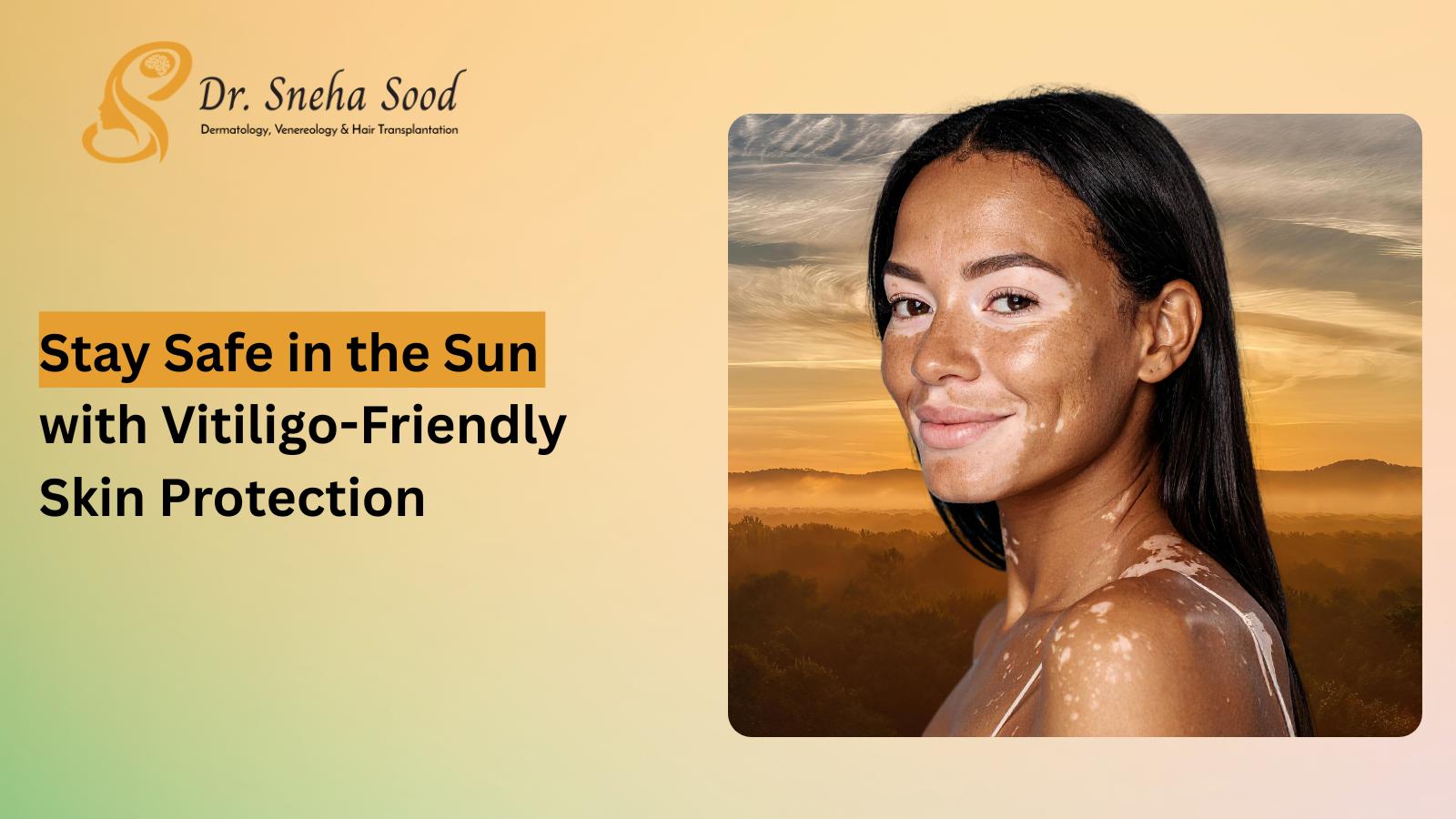



Vitiligo makes your skin beautifully unique, and while some areas may be more sensitive to sunlight, it doesn’t mean you have to avoid the outdoors. With smart sun protection habits, you can enjoy sunny days confidently while keeping your skin healthy and comfortable. Simple steps, like using sunscreen, wearing protective clothing, and staying mindful of peak sun hours, can make a big difference.
Discover simple, effective ways to shield your skin so you can embrace sunny days worry-free.
Think of melanin as your skin’s built-in sunscreen. It soaks up harmful UV rays and shields your cells from damage. Vitiligo patches, however, are like areas without this armor. Without protection, they’re more likely to burn, become irritated, and stand out even more compared to your unaffected skin.
Sun protection isn’t just about avoiding burns, it’s about keeping your skin healthy, comfortable, and confident.
Your skin often gives little warnings before it’s seriously damaged. Keep an eye out for:
Catching these signs early helps you adjust your routine before the sun causes more harm.
Protecting your skin doesn’t have to feel like a chore. With a few simple habits, you can enjoy sunny days without worry.
1. Sunscreen: Your Everyday Armor
Not all sunscreens are created equal. For vitiligo, choose one that’s:
Apply it 15–20 minutes before going outside and reapply every 2–3 hours, especially after sweating or swimming. Think of sunscreen as a protective hug for your skin, it’s worth reapplying generously.
2. Clothing: Fashion Meets Function
Clothing isn’t just style, it’s armor against the sun. Long sleeves, wide-brimmed hats, and UV-protective fabrics can make a huge difference. Sunglasses protect your eyes and delicate skin around them, too. Bonus: sun-smart clothing can look just as stylish as your favorite outfit.
3. Time Your Outdoor Moments
UV rays are strongest between 10 AM and 4 PM. Planning your walks, workouts, or errands outside of these hours can prevent burns without giving up the sunshine entirely. Even finding a shaded spot to relax can make your skin’s day a lot happier.
4. Hydration: Keep Your Skin Happy
Moisturised skin is resilient skin. Use gentle, fragrance-free moisturisers, avoid harsh products, and drink plenty of water, especially in hot weather. Your skin, and your body, will thank you.
5. Keep an Eye on Your Skin
Regularly check for:
Noticing small changes early allows you and your dermatologist to make tweaks before anything escalates.
Interestingly, controlled light can be part of some vitiligo treatments. Dermatologists may use phototherapy, a carefully regulated form of UV light, to encourage repigmentation. This is very different from casual sun exposure, it’s precise, safe, and supervised. Unprotected sunbathing is never a substitute.
Reach out to a professional if you notice:
A dermatologist can personalise skincare routines, recommend safe treatments, and help you feel confident in the sun.
Enjoying sunny days doesn’t have to be stressful for your vitiligo-affected skin. With simple habits, like applying broad-spectrum sunscreen, wearing protective clothing, avoiding peak sun hours, and keeping your skin hydrated, you can stay safe while soaking up the sunshine. A little care goes a long way, helping you feel confident, comfortable, and empowered in your own skin every day.
Confused about how to shield vitiligo-affected skin from sun damage or which routine works best? A dermatologist-led evaluation provides clarity and a personalised approach.
Dr. Sneha Sood, renowned dermatologist at Sood Aesthetics, carefully assesses every concern before recommending treatments, ensuring ethical, customised, and results-driven care. Book your consultation today and give your skin the protection it deserves.


