📢 Important Update: Consultation fee will be revised to ₹600 effective from 1st July 2026.

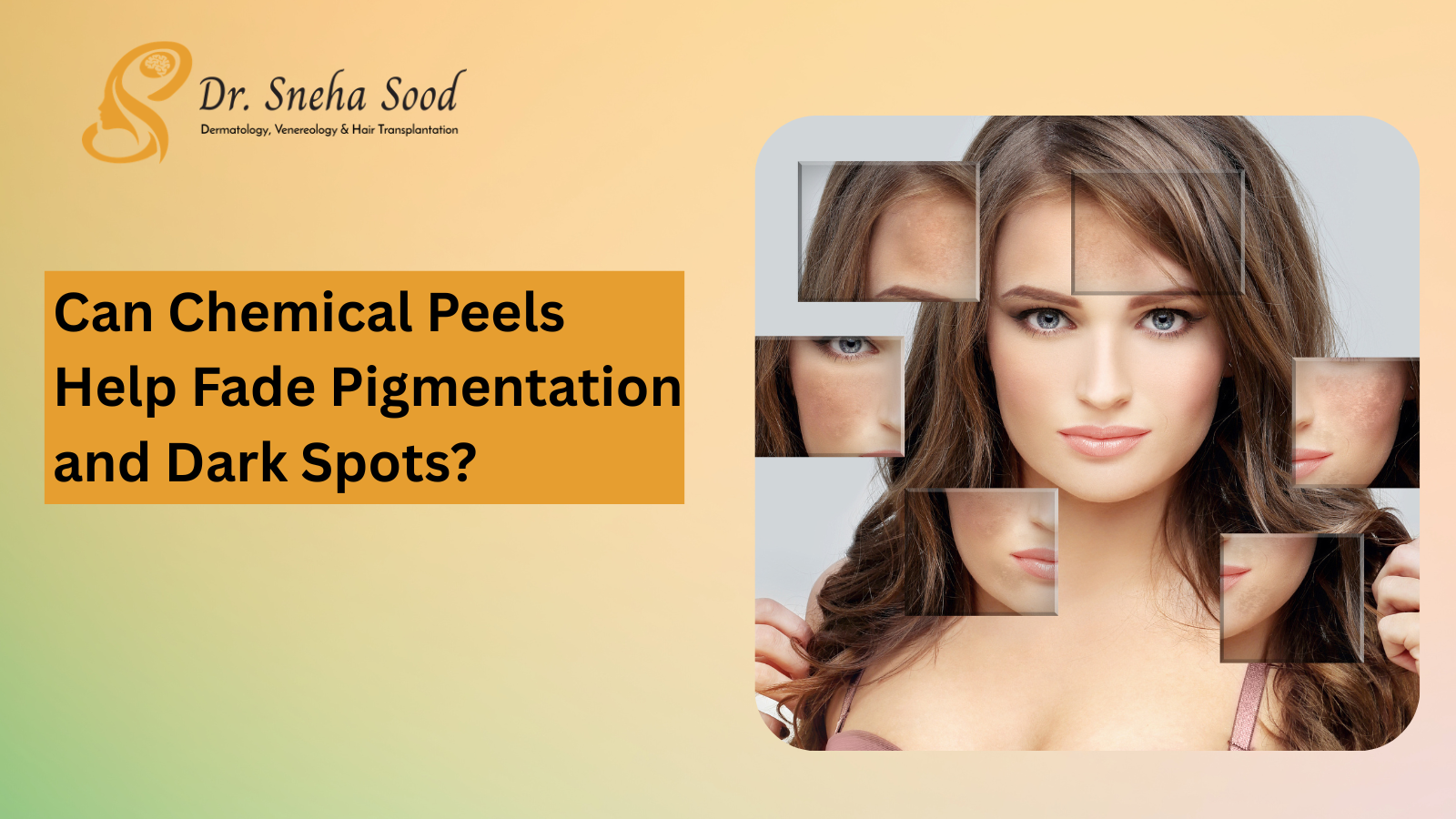



If you’ve ever looked at a dark spot in the mirror and wondered whether a chemical peel could actually help fade it, you’re definitely not alone. Pigmentation, whether it’s post-acne marks, sun spots, or melasma, is one of the most common reasons people seek professional skin treatments. And chemical peels continue to be one of the most trusted ways to improve visible discoloration and refresh the skin.
That said, not every peel works the same way, and the right treatment depends on your skin type and the kind of pigmentation you’re dealing with. Here’s a closer look at how chemical peels help fade dark spots, which concerns they work best for, and what you can realistically expect from treatment.
Pigmentation happens when your skin produces excess melanin in certain areas. This can show up as:
While topical skincare can help to some extent, deeper pigmentation often needs targeted treatment that encourages the skin to renew itself more effectively.
That’s where chemical peels can be especially helpful.
A chemical peel for pigmentation uses carefully selected exfoliating acids to remove damaged outer layers of skin and encourage healthy cell turnover.
As older pigmented skin sheds away, fresher skin underneath becomes more visible. This process can help:
Depending on the concern, the peel may be superficial or medium-depth. The goal isn’t aggressive peeling, it’s choosing the right formulation to improve pigmentation safely while supporting skin health.
This is one of the most common questions: can chemical peels remove dark spots?
In many cases, they can significantly lighten dark spots and visibly improve pigmentation. Some superficial spots may fade beautifully, while deeper pigmentation, like melasma, often improves progressively and may need a treatment plan that combines peels with skincare and sun protection.
Results depend on factors like:
A personalised consultation helps determine what’s realistic and which peel will work best for your skin.
Yes. A chemical peel for uneven skin tone can help restore clarity and brightness by targeting areas where pigmentation appears patchy or where the skin looks dull.
Many patients notice that their skin starts to look:
The improvement tends to build gradually, which often creates natural-looking results rather than a sudden dramatic change.
After a peel, your skin may feel a little tight or appear slightly pink depending on the depth of treatment. Mild flaking can happen as the skin renews itself.
During recovery:
Sun protection is especially important because UV exposure can worsen pigmentation and affect results.
A peel may be worth considering if you’ve been dealing with:
The key is choosing a peel suited to your skin type and pigmentation pattern rather than trying a one-size-fits-all approach.
Pigmentation doesn’t always fade on its own, and waiting it out can feel discouraging when your skin still looks uneven month after month.
At Dr. Sood Aesthetics, customised chemical peel treatments are planned based on your skin type, concerns, and long-term skin goals. Whether you’re dealing with acne marks, dullness, or stubborn pigmentation, the focus is on safe, effective care that helps your skin look clearer and feel refreshed.
Book your consultation today and take the next step toward healthier, brighter-looking skin.